Azriel Pinel (D84067029)
Bachelors of Psychology (110)
Psychology of Memory
Professor Lin
Introduction
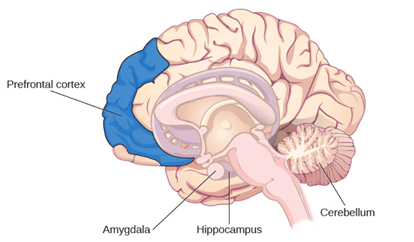
Eyewitness testimonies are considered a wealth of evidence against a defendant in the court of law. An eyewitness stands in front of the court to give an account of a crime they have witnessed. To successfully solve criminal cases, a reconstruction of the facts surrounding the crime is crucial, and eyewitnesses play a highly significant role in this process. According to Dara Mojtahedi, in a recent article published in 2017, “eyewitness’ statements often play a vital role in securing criminal convictions – police surveys show that eyewitness testimony is the main form of evidence in more than 20% of cases.” It is often the only evidence available in certain kinds of crimes. Moreover, many members of the criminal justice system believe that errors of identification are really quite rare, and therefore they have little reason to refrain from prosecuting when the only evidence is an eyewitness testimony (Goldstein, et al., 1989). However, information received from the witness can corroborate other evidence for example, physical evidence recovered at the scene, or even testimonies of other witnesses in the investigation. Psychological scientists, however, question the use of eyewitness testimonies in the judicial system due to the likelihood of inaccuracy and malleability of memory. An approximate 75% of false convictions are due to inaccurate eyewitness testimonies (Mojtahedi,2017). It is imperative to the understanding of this psychological phenomenon, that we first understand the processes of memory (encoding, decoding, retrieval and storage of information). Memory is basically the process that involves the basic processes of acquiring, storing and recalling of events or information (encoding, storing and retrieval). There are four major brain regions associated with memory- the amygdala, the hippocampus, the prefrontal cortex and the cerebellum-, each one playing a vital role in the various types of memory (episodic, procedural, etc.).
In this paper, I will not go into detail about how memory is stored and which parts of the brain associated with the storing of memory, but instead will focus on why it fails. Forgetting is such a common phenomenon that the majority of people have implemented systems and methods to help them remember important information. Psychologist Hermann Ebbinghaus has studied why the concept of time is crucial in memory and one’s ability to recall important details. His study of the relationship between forgetting and time, has led him to develop the forgetting curve. The concept behind the curve is that information is lost quickly after it is learned and it requires practice and constant recall in order to store the memory for longer periods.
History
The year 1901 marked the L. William Stern, in collaboration with a criminal psychologist, sought to identify discrepancies in the use of eyewitness testimonies in the justice system. Together, they designed an experiment in which college students were required to recall details from an incident they had witnessed. The incidents were staged. Stern discovered that in recollection, 4 to 12 details about the incident were false. L. William Stern became the first psychologist to explore the subject of eyewitness testimonies making quite a few important discoveries that have shaped the ideology of this phenomenon today.
Theories
“People can be led to remember their past in different ways, and they even can be led to remember entire events that never actually happened to them.” (Elizabeth Loftus and Jacqueline E. Pickrell, 1995). Elizabeth Loftus, famed for her works in the fallibility of memory, has conducted over four decades of research and experiments regarding the accuracy of eyewitness testimonies. Her research has contributed a great deal in changing the ways eyewitness testimonies are interpreted by the justice system- jurors, lawyers, judges. In 2012, Loftus sought to inform all judges, jurors, and the public, that eyewitness testimonies are unreliable for quite a number of reasons. She claimed “people in general have misconceptions of how memory works.” Of course, in order to successfully convince them and deter them from the traditional view of memory, extensive research was required. I will identify and examine the ways in which, according to Loftus, eyewitness testimonies are unreliable, as well as study the memory mechanisms in the brain. It is imperative to do so in order to accurately determine the extent to which eyewitness testimonies are accurate, and how best to improve it.
Loftus conducted several experiments to test the accuracy of testimonies. How well can an average person recollect details of an incident they have witnessed, according to Loftus, is influenced by numerous factors, such as time, news reports, discussing the event with other witnesses, etc.
False Memory Theory
Much of Loftus’ work is centered on the idea that memory is not reality. Loftus made these claims on the basis that memories can be molded and contaminated by the other unforeseen events surrounding the event in question. Hence, she coined the term ‘misinformation effect’ to describe this concept of the specific details of memories being distorted if questions asked contain misleading information. To provide an example, let us observe some of the findings of Loftus’ experiment. She showed a clip of a vehicle accident to participants and then questioned them as an officer would an eyewitness. Participants were asked questions like “how fast were the vehicles going?” and sometimes the wording of the questions were changed, for example, “how fast were the cars going when they smashed into each other?” This seemingly minor change in the way the questions are asked, greatly altered the participants’ responses. Loftus also allowed for time to elapse between the event and the period of questioning. One week later she asked participants whether or not they had seen any broken glass; “did you see broken glass?” Her findings revealed that participants who were asked “how fast were the vehicles going?” were able to correctly answer the next question- no, there was not any broken glass. However, those participants who were asked “how fast were the vehicles going when they smashed into each other”, assumed that because they smashed into each other, there must have been broken glass- the misinformation effect.
Reconstruction Theory
Our memories tend to be incomplete. After all, they are not like replaying a video. Most of us can only recall the important parts of something and even then, can these important details can be inaccurate. The basic premise of reconstruction theory is that these gaps in our memory are filled up- based on many factors including post event information, culture and perception, – in an effort to make sense of what happened. Well known psychologist, Sir Frederick Bartlett, argues that we do this using schemas. Information can be changed due to uncertainty or a lack of understanding of the events, or perhaps due to cultural differences that may influence a person’s perception of the events. Reconstruction theory helps us to understand how memories can be altered due to post event information. However, it is also very helpful in ensuring that witnesses give their own accounts of what happened in spite of memory gaps, and minimizing, as much as possible, the influence of post event information on their memories. Cognitive interviews are a technique that can assist in increasing the accuracy of witness testimonies.

The Cognitive Interview is a questioning technique used by the police to enhance retrieval of information about a crime scene from the eyewitnesses and victims (McLeod, 2019). The catch with Cognitive interviewing is that they ensure that the questions asked do not provide any additional information. Loftus’ method of questioning in the aforementioned experiment, is a perfect example of the type of suggestive questions to avoid. Geiselman and colleagues (1985) identified several ways in which standard interviewing techniques negatively impact the ability of an eyewitness to accurately recall details of an incident and crimes. For example, traditional police questioning strategies often gave rise to regular jumps between memory modalities (such as describing physical appearances and recalling dialogue) and event recall in a non-chronological order. In the beginning of a cognitive interview, the interviewer is tasked with helping the witness feel relaxed. It is very crucial that the interviewer is perceptive and can tailor their language when addressing the interviewee. The witness is then encouraged to paint a picture of the conditions internal and external to them at the scene as this also impacts their views of what transpired. For example, they would be asked to talk about the mood they were in, their thoughts, etc. Recalling the event backwards and forwards in time, and recalling it from other people’s perspectives is also a method used in ensuring that the recollection of events is as close to accurate as possible. The interviewer aims to be non-judgmental and avoids personal comments throughout. Retrieval cues, are used in these interviews. As Geiselman et al. claimed, recalling details of an event in numerous varying contexts is “key to ‘cueing’ retrieval of a large amount of accurate information from memory – which the standard police interview was restrictive in doing.” In the next part of this paper, I will evaluate the extent to which cognitive interviews (CI) improve memory recall, as well as other techniques that have been used.
Eyewitness Testimony Accuracy in Lineups
In addition to falsely recalling events, witnesses can also falsely recall the identification of criminals. This misidentification, much like the false recollection of the events, is dependent on the way the researcher or investigator presents the suspect to the witness. Most six-pack line ups include at least one suspect. However, if the investigator in charge is aware of who this suspect is, this can be highly problematic and unethical in that, the investigator can subconsciously provide the witness with subtle clues as to who the suspect is. A lot of the times, the media will show that a suspect has been arrested and brought in for questioning regarding a criminal offense. If the witness sees this in the news, during the line up some issues may arise since the brain operates in such a way that, although we are not always conscious of it, we will fill in any gaps with the information previously stored about the suspect from the media.
Does CI Increase the Accuracy of Eyewitness Testimonies?
Delving further into the concept of CI (Cognitive Interviews), we understand that it is crucial to the process that the interviewer remains silent during the witness’s recall- the witness should not be interrupted even so as to request clarification of something. “This attentiveness and freedom from interruption seems to encourage interviewees to provide copious detail, apparently serving as affirmation that they are being taken seriously (in our research, incidents lasting minutes were recalled in interviews exceeding an hour)” (Waddington and Bull, 2007). To promote accuracy, sometimes interviewers would ask the witness to recall something that happened immediately before something; perhaps, for example, a violent outburst. The purpose of this technique is to encourage witnesses to mention all details regardless of how miniscule or insignificant they may appear. In addition, it has also been proven helpful to ask the witness to recall the event from a different perspective to check for consistency. While some may argue that CI serves no purpose in improving the accuracy of eyewitness testimonies due to witnesses having to recall so many details, I strongly believe that CI is a very strategic and useful method of conducting eyewitness interviews to extract the correct information. CI goes beyond merely asking witnesses to recall information. It entails building rapport between the interviewer and interviewee. Interviewers also need to possess social skills. Ensuring that witnesses are relaxed is important in determining how well they are able to recall the events.
Putting this into perspective, let us consider this scenario: A foreigner who has been living in Taiwan for a few years finally decides to purchase a scooter. One day as she is riding home from work, she gets into an accident involving three other riders. The police are called immediately. Upon arrival, the police quickly begin to question the foreigner in Chinese, asking how the accident happened from her perspective, as well as what she recalls regarding the other people involved. The foreigner, trembling with fear, tried her utmost to answer the many questions being thrown at her. Unfortunately, she has not had time to process all that had just happened. Some details were not very clear. Later on, approximately days to a week later, the police call with follow up questions about the interview. The foreigner is told that based on what is shown on the street cameras, she had made a bad turn. The foreigner can recall the event with relatively more clarity and confidence, but did not recall making the bad turn that caused the accident. It is brought to her attention that the testimony given the day of the accident differs in some small ways with that of telephone interview. Although minor, these details are of great importance in understanding the cause of the accident. Questioning an eyewitness can result in a more accurate recall of the events when the information is still fresh in the witness’s mind. However, if the witness is actually part of the incident, they might be in shock and still trying to process what transpired. Moreover, to better understand why details are sometimes incorrect even in situations where the witness genuinely wants to tell the truth about what occurred, we can examine L. Stern and his colleagues’ ideology. He points out that it should be considered that eyewitnesses are not necessarily purposely avoiding telling the truth, and that we need to distinguish between intentional lies and unintentional errors in reporting the incident. He expresses that it can be “either due to faulty perception, lack of attention, misunderstanding of the relationships perceived, faulty questioning and suggestion”. Going back to the previous scenario, there are many factors that could have contributed to the foreigner’s incorrect recollection of the accident. She was being questioned in a language that is not her first language immediately after a shocking incident; she was experiencing fear of having terribly injured a person, fear of deportation, and an array of other emotions. Thus, to ensure the accuracy of a testimony, there are many correlating factors that need to be accounted for prior to accepting a testimony into the court of law.
Another example of a situation where the eyewitness testimony severely delayed the process of solving a murder mystery is in the case of Dawnia Dacosta in 1998. Dacosta was returning home after a midnight church service when her vehicle ran out of gas- something that happened all the time due to mechanical issues. She made her way to the nearest gas station where she ran into the man who would later that night, murder her. Dacosta, choosing to trust a fellow Christian, accepted a ride from a man by the name of Lucious Boyd who at the time was driving a bus of the church he worked at. Two other people at the gas station at the time witnessed Dacosta enter the man’s bus. One witness claimed that the bus was red with the word ‘hope’ marked on the side. Another witness claimed it was a teal blue color. As the investigation progressed, officers looked into churches in the vicinity of the crime scene. They discovered a teal blue bus with the word ‘hope’ written in red. This bus turned out to have blood and items of clothing that belonged to the victim. The man driving the bus during the time in question was convicted of murder. The case was dragged on longer than it should have been mainly due to the fact that police were thrown off by the witness testimonies. Each witness had seen something different. Neither of them were intentionally trying to sabotage the case or slow down the process. It is for this reason that ensuring that eyewitness testimonies are properly evaluated before taking them into full consideration. I will later evaluate these factors and make recommendations, based on scientific findings, to reduce inaccuracy of eyewitness testimonies.
Recommendations
Eyewitness testimonies, being one of the most important, powerful forms of evidence in trials, are also the most problematic. Memories are malleable by nature. This malleability poses a threat to the correctness of the recollection of events by an eyewitness. Increasing the use of double lineups can help ensure that witnesses choose based on factual information. It rids them of the pressure to just pick someone since it is communicated very clearly to them that not even the administering officer is aware of the presence of an actual suspect in the lineup. According to the American Psychological Association (APA) in 2014, during lineups, “results showed that the accuracy of the witnesses’ identifications depended on the instructions the researchers gave them.” This coincides with the findings of the CI method as mentioned previously. “The researchers found that telling witnesses they didn’t have to choose a suspect led to fewer false identifications — but importantly, that instruction did not hinder witnesses’ ability to make accurate identifications” (APA, 2014). The information given by an eyewitness is highly influenced by the way in which they are questioned, as well as the interviewer’s or researcher’s ability to help the witness to relax and think deeply about what they saw, as opposed to merely filling in the memory gaps. It is crucial in ensuring the accuracy of the testimony, that the witnesses are relieved of any pressure to do their part in solving the case. Evidently, in the research report ‘Eyewitness Evidence- for Law Enforcement’ it is recommended that the following steps be taken in obtaining information from the interviewee: “1. Establish rapport with the witness. 2. Inquire about the witness’ condition. 3. Use open-ended questions (e.g., “What can you tell me about the car?”); augment with closed-ended questions (e.g., “What color was the car?”). Avoid leading questions (e.g., “Was the car red?”). 4. Clarify the information received with the witness. 5. Document information obtained from the witness, including the witness’ identity, in a written report. 6. Encourage the witness to contact investigators with any further information. 7. Encourage the witness to avoid contact with the media or exposure to media accounts concerning the incident. 8. Instruct the witness to avoid discussing details of the incident with other potential witnesses.” Also, it is my recommendation that the cognitive interviewing method is improved. We are aware of how much the method of questioning can influence the accuracy of the witnesses’ recall. Therefore, I am of the opinion that if the justice system were to withhold more information and have more control over what information is shared via media platforms prior to questioning witnesses. Also, taking into consideration the mental state of a witness and time as they both affect the retrieval process of memory.
Conclusion
In conclusion, eyewitness testimonies are often the only evidence available in certain kinds of crimes and even when they are not, they still hold great significance in the direction a case takes. More than 20 percent of cases are heavily dependent on testimonies from eyewitnesses. However, these eyewitness testimonies are not always accurate and have actually been the cause of people being wrongly convicted of a crime. The time elapsed between the incident and the time of questioning contributes a great deal to how well an eyewitness can recollect the information regarding an incident. Although much progress has been made, psychologists are still working alongside the justice system to find ways to combat the inaccuracy of eyewitness testimonies and find more ways to further improve
References
Laney, C. & Loftus, E. F. (2020). Eyewitness testimony and memory biases. In R. Biswas-Diener & E. Diener (Eds), Noba textbook series: Psychology. Champaign, IL: DEF publishers. Retrieved from http://noba.to/uy49tm37
Zak, S. (April 2006), How reliable is eyewitness testimony? Vol 37, No. 4. Retrieved from https://www.apa.org/monitor/apr06/eyewitness
Alvin, G. Goldstein, June E. Chance, and Gregory R. Schneller (1989) Frequency of eyewitness identification in criminal cases: A survey of prosecutors. Retrievedfromhttps://link.springer.com/content/pdf/10.3758/BF03329902.pdf
obo. (2019, November 18). Retrieved from https://www.oxfordbibliographies.com/view/document/obo-9780199828340/obo-9780199828340-0026.xml.
Learning, L. (n.d.). Introduction to Psychology. Retrieved from https://courses.lumenlearning.com/wsu-sandbox/chapter/parts-of-the-brain-involved-with-memory/.

 【海馬迴學院】